
When the Clock Becomes the Conductor
How to stop absorbing the room’s urgency and return to a pace that’s actually yours
You didn’t decide to rush today. You just look up and realise you’re doing it — and you can’t quite say when it started. That’s not a discipline problem. That’s tempo drift, and it’s worth knowing how to catch it.

If this is your first time here — welcome. The Maestro’s Dispatch is a weekly note on clarity, leadership, and joyful excellence. If it resonates, you are warmly invited to subscribe here.
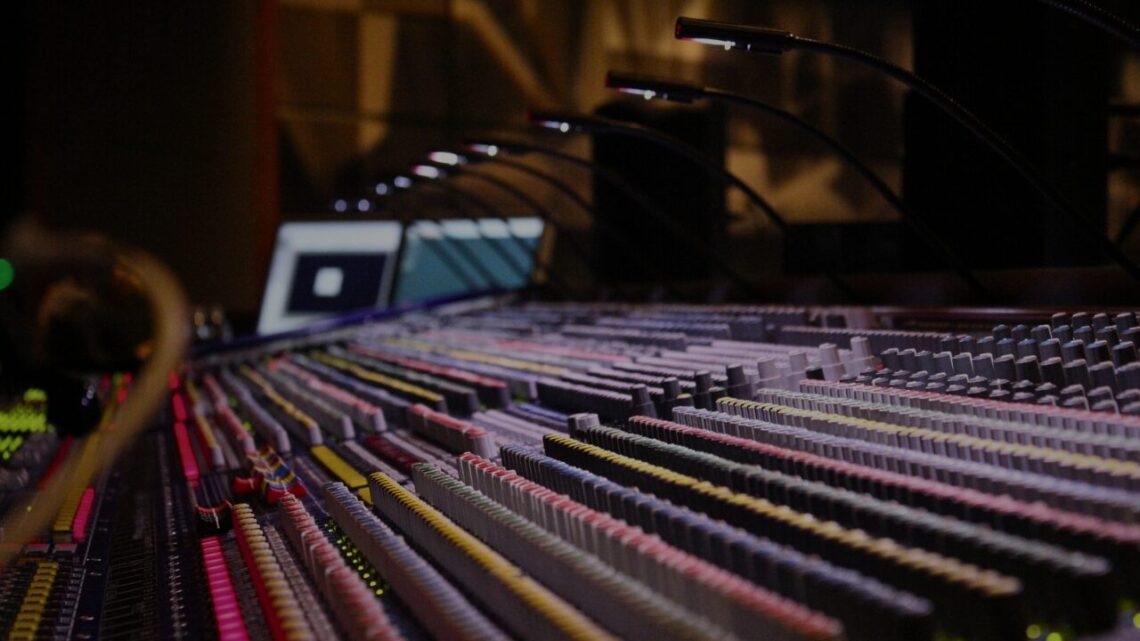
The session was running behind. Not dramatically — five minutes, maybe — but in a professional recording environment, five minutes carries a massive cost pressure all its own. The producer was watching the clock from the booth. Players were checking their call sheets. The assistant music manager had already asked me twice whether we should cut a repeat.
I understood the pressure. I also understood what would happen if I let it in.
There’s a particular kind of tempo drift that comes from anxiety — not from the music, but from the situation around it. The ensemble doesn’t decide to rush. They absorb the pace of the room, the pulse of the conductor, the invisible signal that says we’re running out of time, so move faster. And the moment that signal lands, the music that was holding together begins to unravel at the edges.
I kept the tempo. Not rigidly — there’s nothing musical about rigidity — but steadily. I refused to let the clock become the conductor.
We finished the session with four seconds to spare. The recording was clean. The producer said afterward it was the most coherent session of the week.
Steady doesn’t mean slow. It means the pace belongs to the music, not to the pressure.
Most of us don’t notice our pace changing under pressure — it happens gradually, invisibly, until the work feels frantic and we can’t remember deciding to rush. Like a conductor who refuses to let the clock become the baton, you can develop three practices that keep your pace grounded, even when everything around you is running fast.
Reading the room’s tempo
The first practice is noticing that a room has a tempo — and that you’re absorbing it before you’ve decided whether it’s yours.
Researchers who study urgency in the workplace have found that people routinely prioritise tasks not because they’re important, but because they feel urgent.¹ The feeling bypasses deliberate thought. You don’t choose to speed up. You simply are faster, and you can’t say when it started. A change order lands on your desk at 2pm and suddenly you’re typing faster, skipping lunch, approving line items you’d normally scrutinise — not because the change order required that pace, but because the energy around it did.
In the recording booth, I didn’t notice the tempo drifting in my musicians. I noticed it in myself first — a slight tightening in my gestures, a fractional acceleration in my beat pattern. The drift was mine before it was theirs. By the time an ensemble is rushing, the conductor already lost the tempo several bars back.
The same is true in your work. The drift happens in you before it shows up in the meeting, the email, the decision. That’s where the practice begins: not in managing the pressure, but in noticing you’ve already absorbed it.
Resisting the urgency signal
Once you’ve noticed the drift, the second practice is the pause — a small, deliberate act of resistance before the urgency signal sets your pace for the rest of the afternoon.
Cal Newport observed that we don’t drift toward distraction because we’re weak; we drift because the signal is engineered to pull us.² The urgency signal in your workplace is equally well-designed. It comes through the tone of an email, the expression on a client’s face, the slightly-too-casual mention that the VP is asking about the timeline. Keller and Alsdorf put it plainly: the compulsion to fill every moment with visible, urgent output can become its own bondage — one that quietly costs us the quality we’re trying to protect.³
The resistance is not complicated. Before you pivot to the urgent thing, ask one question: is this urgency real, or is it borrowed? A genuine crisis deserves a genuine response. But most of what presents as urgent in a typical working day is someone else’s anxiety looking for a host — a client who always marks everything high priority, a colleague who processes stress by forwarding it. One question. One breath. That’s usually enough to keep the tempo yours rather than theirs.
Returning to your own pace
The third practice is the one that makes the other two sustainable: building a reliable way back to your own pace, before the pressure arrives.
In music, that way back is the internal pulse — the tempo a conductor holds in the body before raising the baton. It doesn’t require the room’s agreement. It only needs to be held. I had that pulse in the recording session not because I was calm by nature, but because I’d rehearsed it. The steadiness was already there when I needed it.
James Clear argues in Atomic Habits that identity isn’t built through occasional heroic effort — it’s built through small, repeated acts that accumulate into a recognisable pattern.⁴ The equivalent for you is this: choose one task each day and complete it at a pace you’ve decided on, all the way through. Not the pace the inbox is suggesting. Not the pace of whoever last spoke to you. The budget reconciliation done at your rhythm. The client response written without the anxious speed of an overloaded afternoon behind it. The proposal reviewed at the tempo it deserves, not the tempo the deadline is performing.⁵
One task, daily, at a chosen pace. That trains your nervous system in what steadiness feels like. And over time, that becomes the tempo you return to naturally — not the one you strain to reach when the pressure is already in the room.
The recording session ended well not because I was immune to pressure, but because I had practised holding the tempo before the pressure arrived. When the clock began its counting, there was something already in place to hold against it.
You don’t need to be unaffected by pressure to lead with steadiness. You need to have practised steadiness enough that it’s available when the pressure comes looking.
The Joyful Excellence Playbook™ tools in Module 3 — Rhythm to Stability — are the rehearsal room for exactly this. If your pace is largely set by whatever arrived in your inbox this morning, these tools give you something steadier to come back to.
That kind of steadiness is worth cultivating — not because it makes you more productive, though it often does, but because it keeps the work human. It keeps the pace yours. And when you finish the session, you finish as yourself.
What is one task you could complete today at a deliberately chosen pace
— and hold all the way through?
If this resonated, you’re welcome to pass it along to a leader who’s running a little fast right now. And if you’d like The Maestro’s Dispatch in your inbox each week, you can subscribe at stephenpbrown.com/dispatch.
Endnotes
¹ Meng Zhu, Yang Yang, and Christopher K. Hsee, “The Mere Urgency Effect,” Journal of Consumer Research 45, no. 3 (2018): 673–690.
² Cal Newport, Digital Minimalism: Choosing a Focused Life in a Noisy World (New York: Portfolio/Penguin, 2019), 6.
³ Timothy Keller and Katherine Leary Alsdorf, Every Good Endeavor: Connecting Your Work to God’s Work (New York: Dutton, 2012), 233.
⁴ James Clear, Atomic Habits: An Easy and Proven Way to Build Good Habits and Break Bad Ones (New York: Avery, 2018), 38.
⁵ Dina Denham Smith, “5 Tactics to Combat a Culture of False Urgency at Work,” Harvard Business Review, October 17, 2023, https://hbr.org/2023/10/5-tactics-to-combat-a-culture-of-false-urgency-at-work.

