

Attention Management: The Skill No One Taught You
Why protecting your attention matters more than managing your calendar
“I performed one of the most profound works in Western music two dozen times—
and barely experienced it once.”
One winter, I performed Handel’s Messiah twenty-two times in a single season. Timpani, choir, conducting—I did it all. My calendar was flawless. My execution was precise. But somewhere along the way, I stopped noticing. I couldn’t tell you which movements were cut, or that the soprano soloist had flown halfway around the world that morning. I performed one of Western music’s most profound works two dozen times and barely experienced it once.
I had mastered time management. What I hadn’t mastered was attention management.
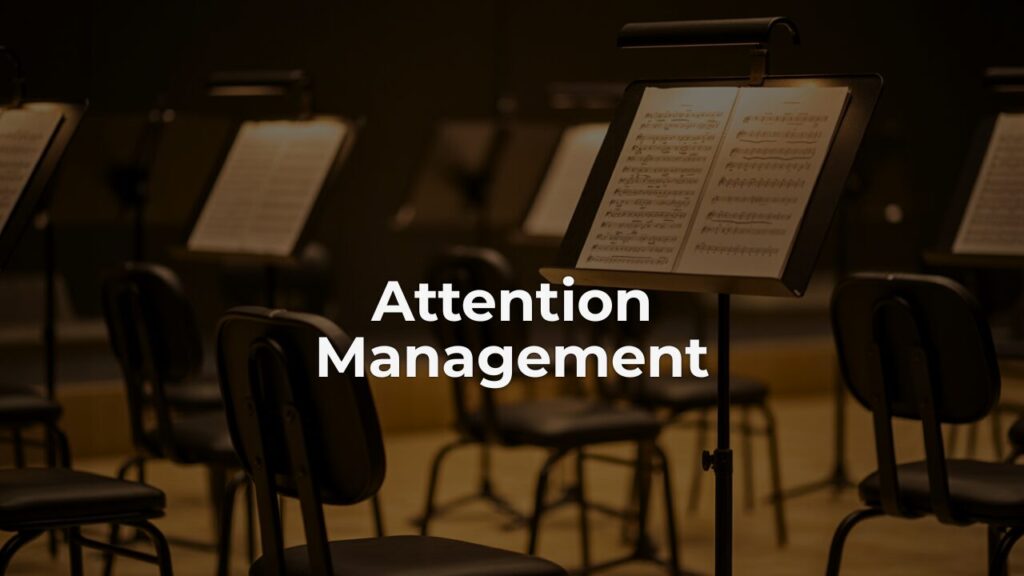
Attention management begins with recognizing that busyness without awareness is just noise in motion. You can show up on time, hit every cue, and still miss everything that matters. The shift from frantic to purposeful isn’t about doing less—it’s about noticing more.
Three redirections can restore presence to even the fullest schedule:
From autopilot to awareness. Psychologist Ellen Langer calls mindless operation “a state where we operate on habit rather than intention.” The antidote isn’t slowing down—it’s asking one simple question: What am I actually noticing right now?
From multitasking to single focus. Research shows that heavy multitaskers perform worse at filtering information, switching tasks, and even multitasking itself. Single focus doesn’t mean doing less. It means doing one thing at a time with your whole mind.
From performance to participation. Performance is about outcome. Participation is about presence. The moments that matter—conversations, decisions, creative work—deserve more than execution. They deserve your full attention.
Attention is the currency of a meaningful life. You can spend it on logistics and lose the experience. Or you can spend it on presence and gain everything else.