
Presence Is Not Proximity
What the people around you are quietly asking for — and how to offer it with intention.
You have been in countless conversations where someone was technically present but clearly somewhere else. The nods came at the right moments. The questions were reasonable. But the attention had already left the room — and you felt it.
If this is your first time here — welcome. The Maestro’s Dispatch is a weekly note on clarity, leadership, and joyful excellence. If it resonates, you are warmly invited to subscribe here.
There is an old English tradition I’ve come to appreciate more as the years go on. Long before it became a day of bouquets and restaurant reservations, Mothering Sunday was a day of return. Apprentices, domestic workers, and young people sent away for employment were released from their duties once a year to travel back — to their home parish, their “mother church,” the place that had first formed them. They brought gifts, yes, but the gift that mattered was simply being there.
No performance was expected. No card said the right thing. The whole point was to arrive, to sit with what mattered, and to let that be enough.
We have, predictably, complicated this. The modern version bristles with expectation: the right brunch reservation, the right flowers, the right words. Busyness dressed up as honor. I have watched people spend the day so anxious to demonstrate care that they forgot to offer it. The distance between arriving and proving you arrived turns out to be considerable.
My mother never asked for a grand gesture. What she wanted — what I only understood gradually — was time that wasn’t already committed to something else. Presence that wasn’t halfway somewhere else. Attention that didn’t keep glancing at the clock.
I’ve since learned this is not just what mothers want. It is what most people want — and what most leaders fail to offer.
Presence is not the same as proximity, and most of us spend our days proving the difference. You can learn to offer full, settled attention — to your team, your family, your congregation — not by clearing your calendar but by changing the quality of how you enter the moments already on it. Three practices make this possible.
Enter the moment fully
There is a quiet but telling moment that happens in most one-on-one conversations: the point at which one person is technically listening but mentally preparing their next response. You have probably been on both sides of it. The words continue, but the connection has already left the room.
Research on interpersonal attention suggests that the quality of listening — not its duration — is what the other person actually registers.¹ We imagine that showing up for longer stretches of time compensates for showing up distractedly. It rarely does. People are remarkably accurate at sensing whether they have someone’s full attention or a portion of it. What reads as care is not time given but time inhabited.
The practice begins before the conversation. It means arriving at a meeting, a dinner table, or a bedside having already set down — at least for now — the weight of what came before and the anticipation of what comes next. A conductor cannot lead an ensemble well while mentally editing the programme for next week’s concert. The downbeat requires the whole of the person giving it. The people in your life are asking for something similar: not more of your hours, but more of you in the hours they already have.²
Protect it from drift
Full presence, once offered, is easy to lose. The pull back to distraction is not dramatic — it is quiet and almost mechanical. A notification. A half-formed worry. The mental rehearsal of a difficult conversation you are dreading. Within moments, you have drifted — and the person across from you has noticed, even if they cannot name it.
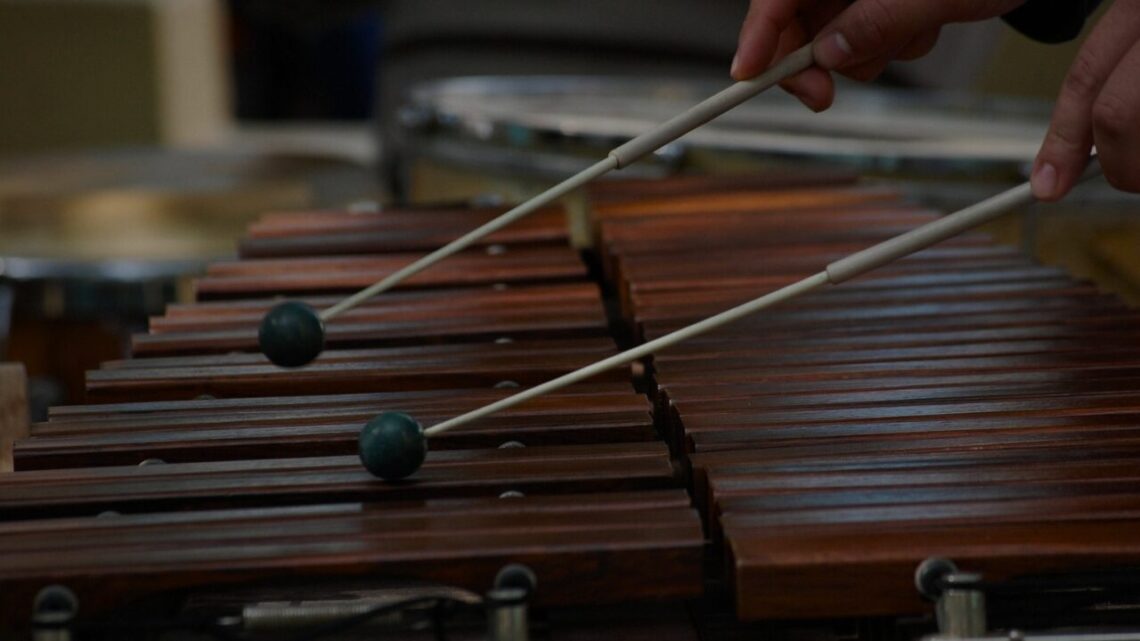
I learned the impact of being present from the back of an orchestra. During a long rehearsal cycle, the room had gone flat — players slumped, books open, the conductor visibly tired. A colleague and I exchanged a glance from the percussion section. No words, no plan. When our next entrance came, we simply stood up. Quietly. Deliberately. We didn’t play louder. We played alive.
Within seconds, the French horns in front of us shifted. Instruments lifted. Books went to the floor. The wave moved forward — brass, then woodwinds, then strings. No announcement. No credit. No one even knew why the room had changed. But it had.
Apathy spreads. So does presence. The question is which one you are carrying into the room.³ Protecting your attention from drift is less about discipline than about honest self-awareness — noticing, without self-condemnation, when you have wandered, and returning. Not once, heroically, but repeatedly. The same rhythmic return that keeps a musician in time is what keeps a leader genuinely present.
Let it compound
There is something worth naming about what happens when people experience full presence regularly rather than occasionally. The occasional moment of being truly seen is powerful. The repeated experience of it is something else entirely — it becomes the texture of a relationship, the quality that shapes how someone speaks to you, what they trust you with, and how they grow in your company.
People’s sense of being known rests not on single memorable moments but on patterns of attention received over time.⁴ This is as true in team settings as in families. The leader who is consistently present — not perfectly, but habitually — builds something that impressive one-off gestures cannot replicate. Trust is not a transaction. It accumulates.
The medieval apprentice who returned each year to his home was not performing a single grand act. He was keeping a rhythm. He was saying, by his return, that some things do not drift — that certain relationships, certain places, certain people remain worth the full journey. Joyful Excellence is not chased in moments of exceptional effort. It is built in the quiet, repeated choice to show up with everything you have.⁵
Most of the people around you are not asking for more of your time. They are asking, quietly and persistently, for more of you inside the time they already have. That is a different kind of generosity — and a more sustainable one. It does not require a cleared calendar. It requires a different quality of arrival.
Presence is not the most dramatic thing a leader can offer. But it may be the most lasting.
What would it mean to offer one person this week not more of your time — but more of you?
If this is your first time here — welcome. The Maestro’s Dispatch is a weekly note on clarity, leadership, and Joyful Excellence. If it resonates, you are warmly invited to subscribe here.
Endnotes:
¹ Nicholas Epley and Juliana Schroeder, “Mistakenly Seeking Solitude,” Journal of Experimental Psychology: General 143, no. 5 (2014): 1980–1999.
² Jerry Colonna, Reboot: Leadership and the Art of Growing Up (New York: Harper Business, 2019), 47.
³ Stephen P. Brown, PMI Tampa Bay Chapter presentation, January 2026. The rehearsal account is drawn from SPB’s direct professional experience as a performing musician and conductor.
⁴ Patrick King, Magnetic: How to Master Small Talk, Build Instant Rapport and Exude Charisma (Plain Key Media, 2014), 38.
⁵ Stephen P. Brown, “Why Your Week Keeps Falling Apart,” Joyful Excellence in Leadership, accessed May 2026, https://www.stephenpbrown.com/clarity/steady-week-disciplines/.

