
What Good Ideas Actually Need
How to steward a good idea before the calendar turns it into a commitment
We talk a great deal about execution. We rarely talk about the moment just before — when an idea is still fragile, still forming, and most in need of something other than a decision.
If this is your first time here — welcome. The Maestro’s Dispatch is a weekly note on clarity, leadership, and joyful excellence. If it resonates, you are warmly invited to subscribe here.
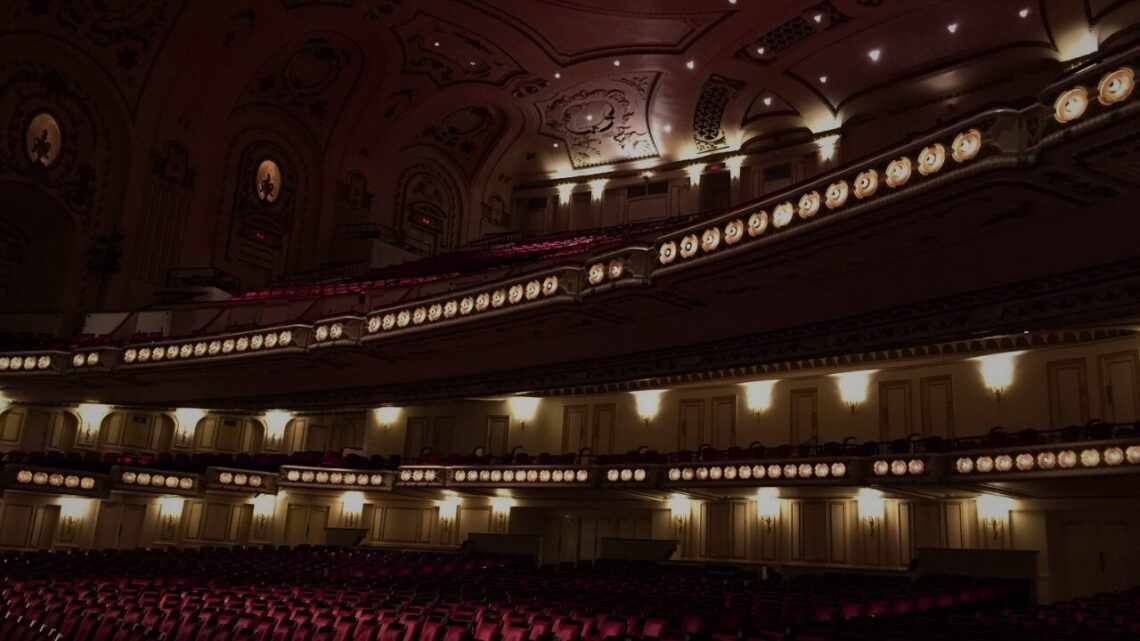
I was listening to a recording of Beethoven’s Ninth Symphony a few moments ago — Barenboim conducting in Berlin — when my mind drifted to a different performance in that same hall. Christmas Day, 1989. Six weeks after the Wall fell, Leonard Bernstein stood in the Konzerthaus on the Gendarmenmarkt and conducted that same symphony, only he changed one word. Schiller’s Freude — joy — became Freiheit — freedom. People sat in the aisles. Some of them were weeping.
That concert existed as an idea long before anyone called it a plan. Someone had to hold it first — quietly, without pressure — before it became something the world could hear.
My wife did the same thing with the cello. For twenty years, she carried a quiet wish to play one. Through a singing career, a publishing career, a calligraphy business — the idea traveled with her, unvoiced. Not abandoned. Not acted on. Just held. One day she mentioned it to the right person. We bought a cello, found a teacher, and she had some of the most life-giving years I’ve watched her enjoy.
The idea didn’t need twenty years of pressure. It needed twenty years of patient keeping.
I’ve been thinking about what it costs us when we don’t know how to do that — when every idea feels like it demands a decision.
Most leaders don’t lose their best ideas through neglect — they lose them through premature pressure. We should treat the first moment of inspiration as an invitation to steward something fragile — learning to do that well may be one of the quietest leadership skills we never name.
When pressure replaces possibility
There is a particular kind of internal weather that arrives with a new idea. You know it. There’s a small lift, a quiet hum of possibility. Something shifted. You noticed something.
And then, almost immediately, the interrogation begins. Is this viable? When could I do this? What would it cost? Who would I need to convince? Within thirty seconds, a possibility has become a project proposal — and most of us haven’t even written it down yet.
This is the moment worth examining. Not because the questions are wrong — they’re not — but because they belong to a later stage. The problem isn’t evaluating ideas. The problem is evaluating them the instant they arrive, before they’ve had a chance to be anything at all. Research in cognitive psychology has shown that the incubation period — the time between first encountering a problem and arriving at a solution — is not wasted time.¹ It is working time. The mind continues to process what the calendar has already moved on from.
When we collapse that space by forcing immediate judgment, we don’t speed up good thinking. We interrupt it. The discipline of awareness is simply this: learning to notice when you’ve shifted from receiving an idea to interrogating it — and pausing long enough to ask whether it was too soon.
Capture Without Commitment
When a conductor first opens a score, it appears as a field of markings—tempo indications, dynamic contrasts, phrasing clues—each pointing toward something not yet fully realized; no interpretation is fixed at this first encounter. The experienced conductor approaches lightly, marking initial observations without overcommitting, knowing that interpretation deepens through repeated study and (piano) rehearsal. You note what stands out, you test ideas over time, and only gradually do those markings settle into a coherent vision that can be clearly communicated and brought to life.
That same instinct applies to ideas. The act of capture is not the act of commitment. Writing something down is not the same as deciding to pursue it. But we conflate these constantly — and the confusion has consequences.
When capture feels like commitment, we stop capturing. The idea that feels half-formed, uncertain, or inconvenient never gets written down because we don’t want to take on another obligation. And so it disappears. Not because it lacked value — but because we asked it to prove its value before we’d even given it a name.
There’s an interesting note from cognitive psychology here: research comparing written versus spoken idea generation found that writing down ideas actually frees working memory rather than burdening it.² Because the idea now exists outside your head, your mind is released from the task of holding it — and can generate more freely from there. Capture is not the end of a thought. It’s the beginning of one.
Twyla Tharp, writing about creative discipline, observes that the artist’s first task is simply to show up and gather — to collect without prejudging.³ The notebook, the napkin, the voice memo at a stoplight — these are not commitments. They are acts of faithful attention. They say: something arrived here, and I honored it enough to keep it.
For any of us managing a day full of real decisions, capture becomes a form of leadership stewardship. It preserves possibility without demanding action. It holds without hurrying. And that distinction, small as it sounds, changes what gets to survive.
Where Ideas Can Wait
Here is what I have learned, somewhat slowly, about my own ideas: the ones that matter most tend to arrive without credentials. They don’t announce their importance. They sit quietly in the margins while urgent things get on the calendar. And if you give them no space at all, they eventually go silent.
My own idea — the one I’ve carried for nearly two decades — only began to resurface at the end of last year, as I began thinking about this year’s goals. I started voicing it, carefully, to a small number of people. Not because I’ve resolved it or because it’s ready. But because I’ve learned to keep ideas differently than I used to. They deserve a place that is not the to-do list and not the trash bin.
The theological tradition has a word worth recovering here: stewardship.⁴ Not ownership. Not production. Stewardship — the faithful tending of something entrusted to your care, regardless of whether it has yet produced a return. We apply that word to finances and time. We rarely apply it to ideas. But the logic holds. An idea that arrives in you has been placed in your keeping. The question is not immediately what will I do with this? The question is first will I tend this well?
Space is not passive. It requires small decisions: where does this idea live, how often do I return to it, who do I trust to hear it before it’s ready? These are quiet disciplines. They rarely appear on a performance review. But over years — as my wife would tell you, as Bernstein’s colleagues would confirm — they make the difference between ideas that are buried and ideas that eventually get to sing.⁵
The most important creative act you may perform this week is not producing something new. It may be simply giving one fragile idea a safe place to exist a little longer.
Joyful Excellence is not only expressed in what we accomplish. It lives just as surely in what we learn to protect.
What is one idea you’ve been carrying that deserves a little more room — and a little less pressure — than you’ve been giving it?
If this is your first time here — welcome. The Maestro’s Dispatch is a weekly note on clarity, leadership, and Joyful Excellence. If it resonates, you are warmly invited to subscribe here.
Endnotes
¹ Ap Dijksterhuis and Teun Meurs, “Where Creativity Resides: The Generative Power of Unconscious Thought,” Consciousness and Cognition 15, no. 1 (2006): 135–139.
² Duo Liu, Zheng Liu, and Tao Xing, “Interaction Effect of Response Medium and Working Memory Capacity on Creative Idea Generation,” Frontiers in Psychology 6 (2015): 1582.
³ Twyla Tharp, The Creative Habit: Learn It and Use It for Life (New York: Simon and Schuster, 2003), 80–86.
⁴ R. C. Sproul, Knowing Scripture (Downers Grove, IL: InterVarsity Press, 1977), 17–19.
⁵ Leonard Bernstein, “Ode to Freedom Concert,” Konzerthaus Berlin, December 25, 1989. Programme notes at Leonard Bernstein Office, leonardbernstein.com/about/conductor/historic-concerts/berlin-wall-concert-1989, accessed April 2026.

